
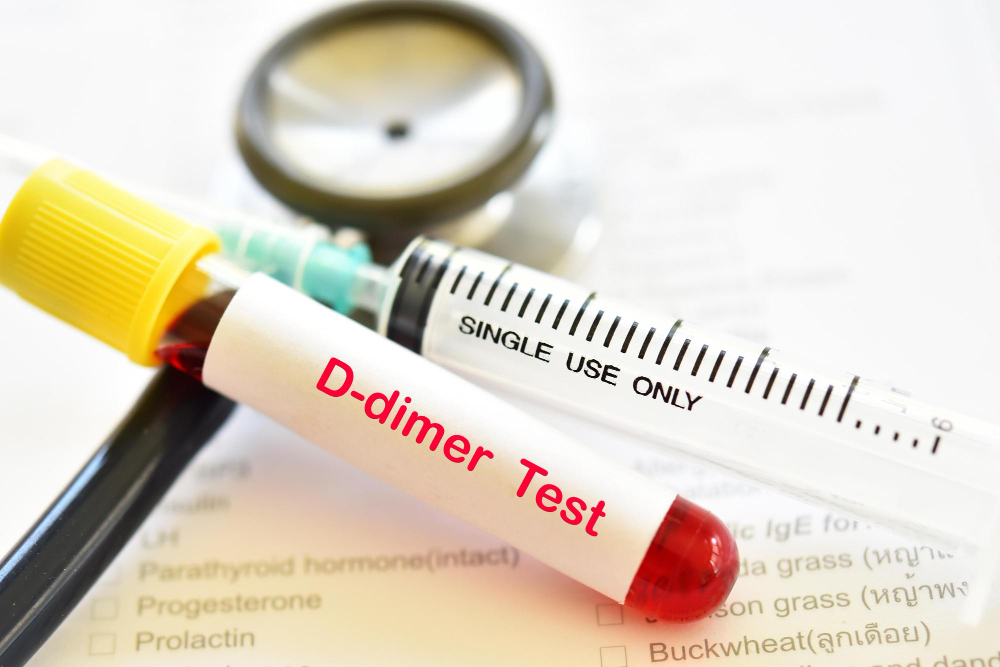
What Is the D-Dimer Test?
The D-Dimer test is a simple blood test. It helps doctors check for blood clots in your body. When your body breaks down a clot, it makes a substance called D-Dimer. Because of this, the test measures how much D-Dimer is in your blood. Usually, healthy people have very low levels. However, higher levels may point to a clot somewhere in your body.
Why Is the D-Dimer Test Important?
Blood clots can be dangerous. For example, they can block blood flow to important organs. The D-Dimer test helps doctors find out if you might have a clot. If your D-Dimer levels are high, you may need more tests. On the other hand, normal levels often mean you do not have a serious clot. Because of this, the test is a key tool for blood clot detection.
Symptoms That May Lead to a D-Dimer Test
Doctors may order a D-Dimer test if you have symptoms of a blood clot. For instance, you might notice:
Sometimes, doctors also use this test after surgery or injury. This is because your risk for clots can be higher during these times.
How Is the D-Dimer Test Performed?
The D-Dimer test is quick and easy. First, a nurse or technician will clean your arm. Next, they will use a small needle to take a blood sample from a vein. After that, your blood goes to a lab for testing. You do not need to stop eating or drinking before the test. Because the test is simple, you can return to your normal activities right away.
Interpreting D-Dimer Test Results
After the test, your doctor will look at your D-Dimer levels. The D-Dimer normal range is usually less than 0.5 micrograms per milliliter (µg/mL). However, this range can vary by lab. If your D-Dimer levels are low, it often means you do not have a blood clot. On the other hand, high D-Dimer levels may suggest a clot is present. Still, other things like infection or recent surgery can also raise your D-Dimer levels. Because of this, your doctor may order more tests if your result is high.
Conditions Detected by the D-Dimer Test
The D-Dimer test helps doctors find several serious conditions, such as:
Because these conditions can be life-threatening, early detection is very important.
Limitations and Accuracy of the D-Dimer Test
While the D-Dimer test is helpful, it is not perfect. Sometimes, the test gives a false positive. This means it shows high D-Dimer levels when there is no clot. For example, pregnancy, infection, or recent surgery can cause this. On the other hand, false negatives are rare but possible. This means the test misses a clot. Because of these limits, doctors often use other tests, like ultrasound or CT scans, to confirm the result.